Mold Remediation - PUDDLES Restoration

PUDDLES Restoration is a FL-licensed, insured, and certified mold remediation (i.e., mold removal) company with a dedicated office in Daytona Beach, FL, among other locations, serving residents and business throughout Volusia County.

Florida Law: Chapter 468, Part XVI of the Florida Statutes (§ 468.84–§ 468.8424)

In Florida, a Mold Remediator license is governed Florida law and regulated by the Florida Department of Business and Professional Regulation (DBPR). Florida requires that you pass an approved exam, meet specific education and field experience criteria, carry at least $1 million in general liability insurance, and apply through DBPR.

PUDDLES Restoration holds Florida state licenses as both Mold Assessors and Mold Remediators (License #: MRSA5438 / MRSR5453, respectively), and certifications from the Institute of Inspection, Cleaning and Restoration Certification (IICRC) as Mold Remediation Specialist (MRS) and Applied Microbial Remediation Technician (AMRT).

As such, PUDDLES brings expert Mold Remediation Services to Daytona Beach, FL, and surrounding coastal communities, available 24/7 when you need help most. If you suspect mold, water damage or excess moisture in your home or business, call (386) 795-3307 or contact the team online to schedule an inspection.

Florida’s warm, humid climate makes coastal properties especially prone to moisture build up. In Daytona Beach, FL, mold can begin developing within 24 to 48 hours after water intrudes. Whether the source is storm surge, a leaking roof, or a hidden pipe, mold spreads quickly in wall cavities, under flooring, and in poorly ventilated areas.

What Does the Mold Removal Process Look Like?

Here is what to expect when you work with PUDDLES Restoration:

  1. Inspection: A certified technician evaluates your property using advanced moisture detection tools to estimate the overall scope of work to perform the mold removal.
  2. Containment: Containment barriers and HEPA air scrubbers are set up to limit the spread of mold spores to unaffected areas to minimize cross-contamination.
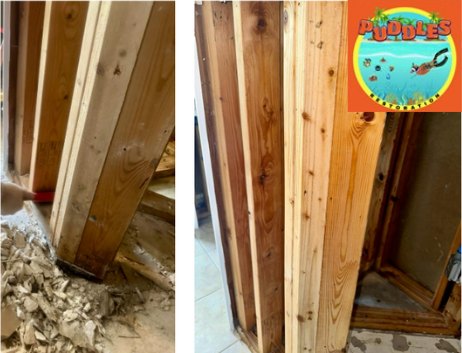
  3. Mold Removal: Industry-approved techniques safely remove mold colonies from affected surfaces and materials.
  4. Drying and Moisture Control: Commercial-grade structural drying equipment addresses the underlying moisture issue to help reduce the likelihood of mold returning.
  5. Clearance and Documentation: We advise our clients to hire an independent Florida-licensed mold assessor (confirm they are licensed) to conduct a post remediation verification (PRV) test to confirm the work is complete, and provide you with documentation to support any insurance claim.
Mold Removal Services - PUDDLES Restoration

Why Choose a FL-Licensed Mold Removal Company in Daytona Beach?

Areas in Volusia County, such as Daytona Beach, FL sees significant rainfall, hurricane activity, and coastal humidity that can push moisture into walls and crawl spaces year-round. We have remediated many properties where the owner – “knew a guy” — attempted to “clean” mold without proper knowledge, equipment, and containment, causing the spread of mold spores further throughout the property, worsening the problem.

PUDDLES Restoration meets Florida state regulatory standards and provides digital documentation for insurance claims, which is especially valuable after the storm and water damage events common along the coast.

For a full overview of services, visit the Mold Remediation Services page on the PUDDLES Restoration website. You can also find PUDDLES Restoration on Google Maps to read verified reviews from property owners across the region.

Connect with PUDDLES Restoration in Daytona Beach, FL Today

PUDDLES Restoration serves Daytona Beach, FL, along with Ormond Beach, Port Orange, New Smyrna Beach, and the wider Volusia County, FL, area. Mold does not wait, and neither should you. Call (386) 795-3307 or reach out through the Contact Us page to schedule your inspection with a licensed remediation team today.

PUDDLES Restoration
Ocala: (352) 722-3790
Gainesville: (352) 722-3791
Daytona: (386) 795-3307
Email: [email protected]
Website: www.PUDDLESrestoration.com
Facebook: https://www.facebook.com/puddlesrestoration/
BBB A+: https://www.bbb.org
Instagram: https://www.instagram.com/puddlesrestoration/

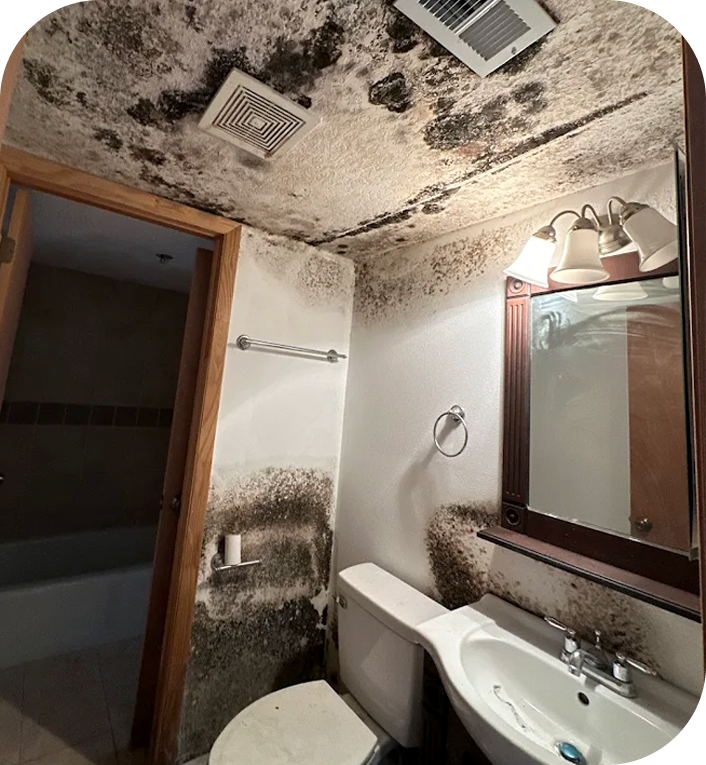
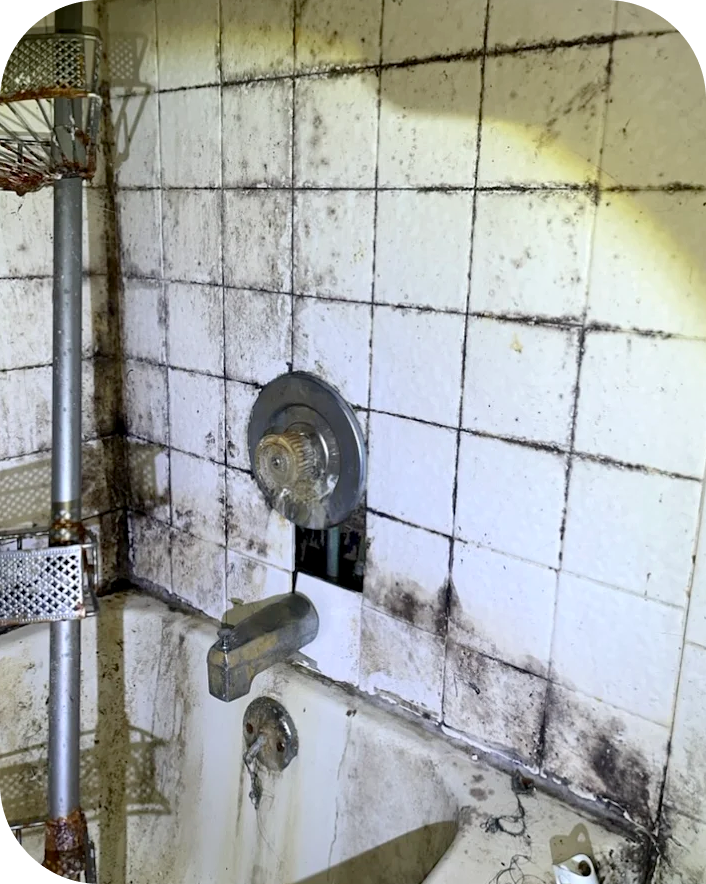
Mold growth documented during PUDDLES Restoration mold remediation inspection
PUDDLES Restoration logo

Licenses & Certifications:

  • FL Licensed Mold Assessor (MRSA)
  • FL Licensed Mold Remediator (MRSR)
  • IICRC Odor Control Technician (OCT)
  • IICRC Applied Structural Drying (ASD)
  • IICRC Water Damage Restoration (WRT)
  • IICRC Carpet Cleaning Technician (CCT)
  • IICRC Health and Safety Technician (HST)
  • IICRC Mold Remediation Specialist (MRS)
  • IICRC Commercial Drying Specialist (CDS)
  • IICRC Trauma and Crime Scene Technician (TCST)
  • IICRC Upholstery & Fabric Cleaning Technician (UFT)
  • IICRC Carpet Repair and Reinstallation Technician (RRT)
  • IICRC Applied Microbial Remediation Technician (AMRT)
  • IICRC Fire and Smoke Damage Restoration Technician (FSRT)
  • HAZWOPER 40 Certification (29 CFR 1910.120)
  • ASBESTOS:
    • Contractor/Supervisor Accreditation
    • OSHA Respirator Protection Certification (OSHA 29 CFR 1910.134)
    • NIOSH 582e — Sampling and Evaluating Airborne Asbestos Fibers
  • U.S. Environmental Protection Agency (EPA) Lead-Safe Certified Firm
  • Institute of Inspection Cleaning and Restoration Certification (IICRC) Certified Firm
  • U.S. Environmental Protection Agency (EPA) Lead Renovator RRP (Personnel) Certification

Experienced & Trusted Staff icon

Experienced & Trusted Staff

Natural Products icon

Natural Products

24-hr Live Support icon

24-hr Live Support

Quality Equipment icon

Quality Equipment

Mold Remediation & Restoration

Get more restoration & recovery tips!

FAQ

Mold grows when moisture is present. If your home or property has excess humidity, water leaks, roof leaks, plumbing failures, flooding, or past water damage, mold can begin growing, often without being immediately visible.

Mold spores are microscopic and are constantly present in the air. They only need one thing to grow: moisture.

Control moisture, and you control mold.

Mold reproduces via tiny spores that are invisible to the naked eye and float through the air. When those spores land on wet surfaces like drywall, wood, insulation, cabinets, and flooring, mold begins growing.

There are many types of mold, but none of them will grow without water or elevated humidity.

Recommended indoor humidity levels: Keep indoor humidity below 60% (ideally between 30%–50% relative humidity).

Absolutely.

Significant mold issues will usually develop in hidden areas like:

  • Behind walls near plumbing lines (kitchens and bathrooms)
  • Behind base cabinets
  • Beneath flooring
  • Inside attics
  • Inside HVAC systems

If you smell an odor and cannot determine the source, you should strongly consider a mold test.

Yes. PUDDLES Restoration strongly recommends hiring a licensed professional to conduct mold testing after any roof leak or flooding event.

These events force moisture deep into hidden areas of your property such as: behind walls, under flooring, and inside attic spaces where mold can quickly grow and spread out of sight.

Even if visible mold is not immediately present, lingering dampness creates an ideal breeding ground for mold colonies. By conducting mold testing promptly after water intrusion, you can:

  • Catch problems early
  • Protect your family’s or employees’ health
  • Prevent long-term structural damage
  • Strengthen insurance documentation

Real Example

Here is mold growth that developed within just a few days after Hurricane Helene flooding: https://www.facebook.com/puddlesrestoration/posts/pfbid02uXSN5ZrcKNjuedkSDPM9GgSknN86jE4RwFjyTqKr6GeFPfGiy4cSznHY1bnHKQPUl

Contrary to popular belief, mold testing itself is fast when handled by experienced professionals.

Sampling a typical home from start to finish can take less than an hour, depending on equipment and scope. Getting these results can take time because:

  • Samples are mailed to a laboratory
  • The lab places them in queue
  • Microscopic analysis is performed
  • A formal report is generated

We typically receive laboratory results within 1 business day. If you require a mold remediation protocol, that can take additional time to prepare properly.

Short answer: No. DIY mold test kits will almost always confirm mold is present because mold is everywhere. The real question is whether you have elevated mold spores resulting in a Condition 2 or Condition 3 environment that requires professional remediation.

DIY kits are reliable at confirming mold exists. They are highly unreliable at determining whether remediation is necessary.

CHEAP IS EXPENSIVE.

Hire a Florida-licensed mold assessor who can perform proper testing and have those results confirmed by a reputable laboratory. This allows you to make informed decisions based on data, not guesswork.

See Examples

https://www.facebook.com/puddlesrestoration/posts/pfbid0hfJiVnAr6Roo3RQ2qJaECqRBLRqFvvonESzhGyghC1ZV9o1o7HKLYPSrNhvnC1rUl

https://www.facebook.com/puddlesrestoration/posts/pfbid0YnbhLc72gniWGUHzWbxWFBWegpQScwCA7tv4ABN5GgMbT5auqf1vYabFEKeexTuzl

Yes. 

Mold gradually destroys the materials it grows on. The longer mold is present, the more damage it causes.

  • Drywall deteriorates
  • Wood weakens
  • Insulation becomes compromised
  • Structural integrity can be affected

Controlling moisture and eliminating mold early prevents very expensive repairs and it protects your property value.

If the underlying moisture source is not properly identified and eliminated, mold will almost always return, no matter how thoroughly it is cleaned from the surface. That is why it is critical to:

  • Identify the source of the moisture
  • Fix it properly
  • Perform remediation correctly

Do not settle for temporary cosmetic fixes.

No. Porous materials such as drywall that are contaminated with mold typically must be removed and properly disposed of.

No. 

  • Paint and caulk do not eliminate mold.
  • Bleach does not properly eliminate mold inside porous materials.
  • Surface cleaning does not fix the moisture source.

If the moisture issue remains, the mold will return.

Always address: the moisture source, proper containment, and professional remediation.

No. Bleach does not properly eliminate mold embedded in porous materials. It may lighten the appearance, but it does not resolve the root issue. Proper remediation requires appropriate biocides, containment procedures, and moisture correction.

Yes. Mold produces allergens and, in some cases, mycotoxins.

Inhaling or touching mold spores can cause allergic reactions in sensitive individuals.

Common symptoms of a reaction include:

  • Sneezing
  • Runny nose
  • Red eyes
  • Skin rash (dermatitis)
  • Hay fever–type symptoms

Allergic reactions can be immediate or delayed.

Yes. Molds produce tiny spores that act as allergens or irritants. In individuals with asthma, especially those allergic to mold, inhaling spores can trigger inflammation in the airways and lead to asthma attacks.

Even individuals who are not allergic may experience respiratory irritation.

Mold does not cause asthma in everyone, but it can absolutely trigger asthma attacks in susceptible individuals.

Yes.

Avoid breathing mold or mold spores, which are airborne when disturbed. Protection is not optional. At minimum, you should wear:

  • An N-95 respirator
  • Gloves
  • Eye protection

Professional remediation crews use full-face respirators, proper filtration cartridges, gloves, and protective clothing. We use a 3M 6900 Full Face Mask with two 929… filters, gloves, and eye protection.

Mold containment is the process of isolating the contaminated area to prevent spores from spreading to unaffected areas (cross-contamination). When mold is disturbed during remediation, spores become airborne. Without proper containment, those spores can travel throughout the structure. Containment typically includes:

  • 6 mil polyethylene plastic sheeting
  • Tape (single or double-sided)
  • Zip poles
  • Zipper openings for controlled entry and exit

All openings, including doors, windows, and vents, must be sealed. HVAC vents are also covered because duct systems efficiently spread spores. Containment may also include:

  • Negative air machines
  • HEPA filtration
  • Air scrubbers
  • Decontamination chambers (larger projects)

Containment protects occupants and ensures the problem doesn’t spread.

“Need” is a strong word.

If you plan to file an insurance claim, the insurance company may require:

  • Professional mold testing
  • A written mold remediation protocol
  • Post-remediation verification testing

A mold remediation protocol is a detailed written plan outlining:

  • The scope of contamination
  • Containment requirements
  • Removal procedures
  • Air filtration requirements
  • PPE requirements
  • Post-remediation verification procedures

The protocol should be written by a licensed mold assessor who is independent of the mold remediator to avoid a conflict of interest.

PUDDLES advises clients to never rely on a remediation protocol written by the contractor performing the remediation work.