BLACK MOLD vs OTHER MOLD

Port Orange, Volusia County, FL 32128

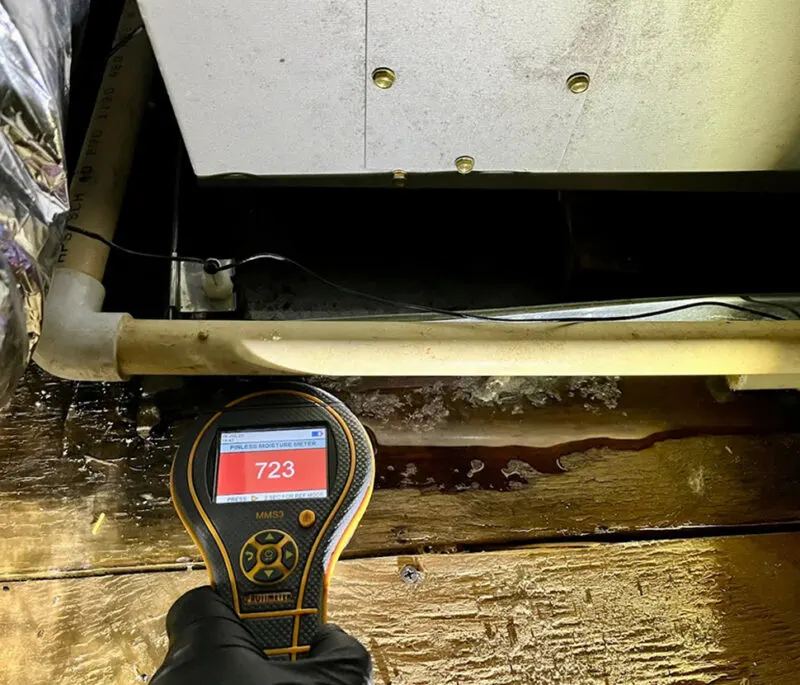
Mold growth visible inside an HVAC air handler closet in Volusia County, FL

Mold found inside an HVAC air handler closet — one of the most problematic locations because spores can spread throughout the entire duct system.


“Black mold” is commonly used to identify the Stachybotrys species, which typically appears dark green to black in color and is usually found on drywall, wood, or paper products, especially when the affected material is exposed to excess moisture over extended periods of time.  Unlike powdery molds, black mold is usually slimy or wet when the affected material(s) stays damp.

If you need mold removal in Daytona Beach, Ormond Beach, Port Orange or any part of Volusia County, FL, contact PUDDLES Restoration asap.  Knowing how black mold differs from other varieties helps PUDDLES Restoration choose the best cleanup and remediation options for you.


What Happened? 


The HVAC Air Handler leaked for an extended period, saturating the platform and the surrounding drywall above and below, resulting in mold growth in numerous areas. 


There aren’t any good locations within your property to have mold, but there are some areas that are more problematic than others.  Mold colonies within close proximity to an HVAC system is one of the worst locations to have mold in your property because the spores can enter your HVAC system.  Since mold spores are tiny (i.e., invisible to the naked eye), they cannot see them as they effortlessly travel through HVAC ducts and be dispersed throughout your property.  See the EPA’s A Brief Guide to Mold, Moisture and Your Home.  


Mold, whether inside residential or commercial properties, raises concerns due to excess moisture and potential health risks.  The signs may appear as dark spots on drywall, fuzzy areas on wood, or ceiling discoloration.  While “black mold” is often seen as especially harmful, the reality is the impact any mold has on anyone is specific to that person.


What Is Mold and Why Does It Grow?


Mold is a fungus that thrives in damp humid environments.  Mold spores are naturally present in the air, both inside and outside.  When these spores land on moist surfaces, they begin to grow and spread.  Once mold begins to grow, it can spread quickly across building materials such as drywall, insulation, wood, carpet, and ceiling tiles.


Underside of an HVAC air handler support platform showing water damage and mold conditions in a Volusia County home

The underside of the HVAC’s air handler support platform, showing conditions that allow mold to thrive when moisture collects out of sight.


Common conditions that encourage mold growth include, among other things:


  • Basements and crawl spaces that stay damp
  • Insufficient ventilation in kitchens and bathrooms
  • Leaks from pipes or roof structures
  • Elevated humidity inside the home
  • Storm damage or flooding events


What Is Black Mold?


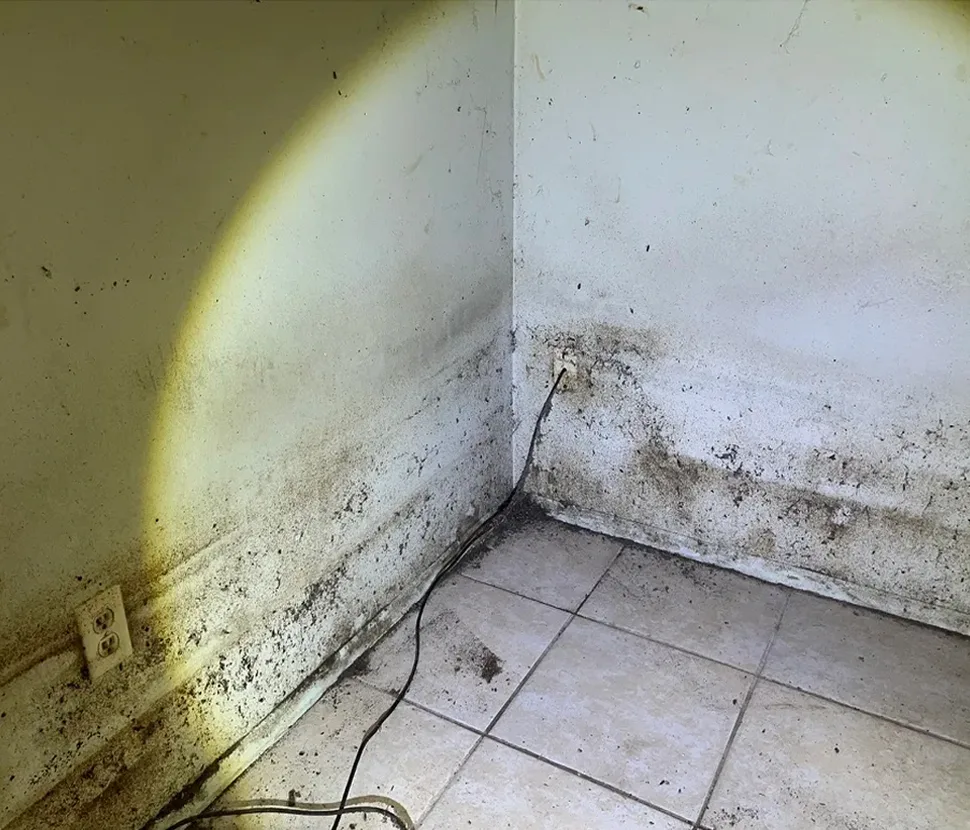
The colloquial term “black mold” often describes the species Stachybotrys chartarum.  This type of mold is known for its dark green to black coloration and usually grows on porus materials, such as drywall, wood, or paper products.  Black mold tends to form in places where moisture has been present for an extended period.  For example, walls and ceilings damaged by water leaks or areas impacted by flooding.  It tends to appear slimy or wet rather than powdery, particularly in environments that remain damp for extended periods.


Mold growth on an HVAC air handler support platform and behind surrounding walls caused by a unit leak in Volusia County, FL

The HVAC air handler leaked over time, causing mold to develop on the support platform and spread behind the surrounding walls — damage that would have been invisible without opening the structure.


What Are the Other Mold?


The phrases “other mold” or “regular mold” describes the numerous mold species that may grow indoors.  While thousands of types exist, only a handful are typically found in homes and businesses, such as:


  • Aspergillus
  • Penicillium
  • Cladosporium
  • Alternaria

Mold has a range of colors, including green, white, gray, yellow, and black.  Due to these variations, accurately identifying the specific mold species by visual inspection alone is difficult and not recommended.  PUDDLES Restoration recommends obtaining a mold test conducted by a licensed mold assessor and confirmed by a laboratory.  


Are The Differences Between Black Mold and Other Mold Overstated?


While black mold tends to get the most attention, the distinction between black mold and other types of mold is not as significant as many assume.


What Are The Colors of Black Mold?  


Black mold is typically darker in color and may appear black or deep green. Other molds may display a wider range of colors including white, gray, or lighter green.  However, color alone does not accurately identify the type of mold present.


HVAC closet ceiling with an open wall cavity revealing mold contamination behind drywall in a Volusia County property

The HVAC closet ceiling and the adjacent wall cavity opened during remediation — illustrating how mold color alone cannot identify species, as different types can look visually similar.


How Quickly can Mold Spread?


When moisture is available, most types of mold quickly multiply and the mold colonies release spores that drift through the air and settle in other parts of the building.


What Conditions Are Required for Mold Growth?


Other molds can develop more quickly after minor leaks, humidity buildup, or condensation, but black mold tends to grow on surfaces that have been in contact with excess moisture for an extended period of time. 


What is the Texture of Black Mold?


Black mold is slimy when wet, while other molds are usually powdery or fuzzy.


What are the Health Concerns Associated With Mold?


All mold types have the potential to adversely impact indoor air quality and trigger health symptoms in sensitive individuals. There are four groups of people who are particularly sensitive to mold (to be discussed another time).  Individuals who have asthma, allergies, or weakened immune systems may react more severely to mold exposure.  While black mold is sometimes labeled as “toxic mold,” other molds can also cause similar health issues.


The backside of removed drywall showing extensive mold growth that was not visible from the room side in a Volusia County home

The backside of removed drywall — mold that was completely invisible from inside the room until the material was taken out. This is why professional remediation is necessary; surface cleaning alone would have left this growth untouched.


Possible symptoms associated with mold exposure include:


  • Irritation of the respiratory system
  • Persistent cough or wheezing
  • Blocked nasal passages
  • Discomfort or irritation in the eyes
  • Skin issues or irritation
  • Occurrence of headaches


What Did PUDDLES Do? 


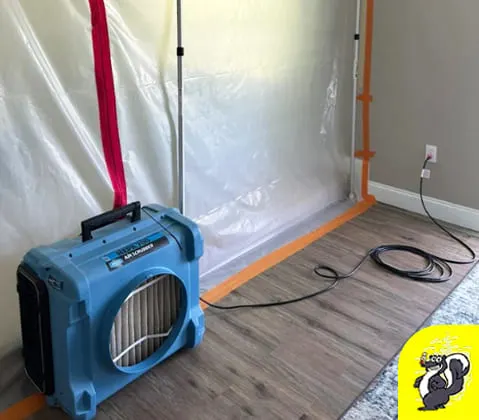
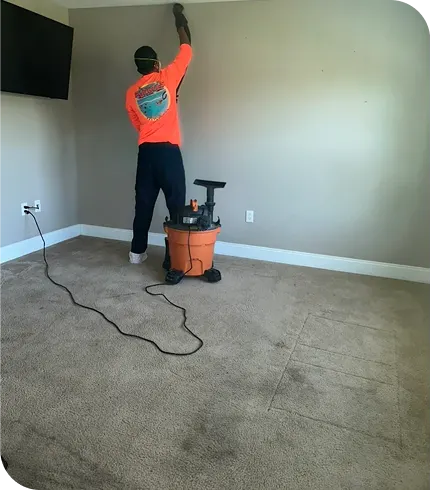
Because we are not a licensed HVAC company, we coordinated with a licensed HVAC company to remove the HVAC Air Handler and supply plenum.  PUDDLES then established containments to minimize cross contamination to non-affected areas of the home during the mold removal process.  We removed all of the affected materials, include the HVAC Air Handler’s support platform and surrounding affected drywall.  We cleaned the substrate (e.g., studs, bottom plate, etc.) by wire brushing and HEPA vacuuming.  Sprayed the substrate with plant based antimicrobial and allowed our commercial grade dehumidifier and HEPA Air Scrubber to control the moisture while cleaning the air, respectively. 


Fortunately, we passed the mold test that was conducted by an independent Florida licensed mold assessor, which allowed the homeowner to start the reconstruction process. 


Why Is Professional Mold Removal Important?


Cleaning only what you can see won’t get rid of mold in your property, because it often grows out of sight—behind walls, under floors, or inside insulation where moisture collects. Restoration specialists, like PUDDLES Restoration, can determine how far the mold has spread and safely remove any materials that are affected.


Trained technicians typically follow a structured process that includes, among other things:


  • Inspecting the affected areas
  • Identifying the moisture source
  • Containing the mold to prevent airborne spread
  • Removing contaminated materials
  • Cleaning and sanitizing surfaces
  • Drying the structure to prevent regrowth


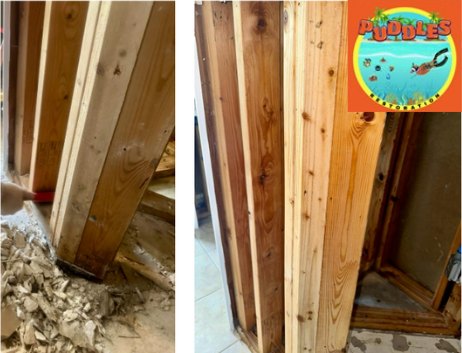
Before and after mold remediation on wood framing by PUDDLES Restoration — wire-brushed substrate restored to like-new condition, Volusia County, FL

Left: A PUDDLES Restoration technician wire-brushing mold from the wood substrate. Right: The same framing after professional remediation — clean and restored.


The Importance of Mold Remediation


Professional mold remediation involves more than just eliminating visible mold; it also requires addressing the underlying factors, such as moisture, that contributed to the mold development.  If moisture issues are not resolved, mold is likely to reappear.


PUDDLES Restoration’s professional mold remediation in Volusia County, FL includes moisture control strategies, reducing humidity levels, utilizing containments where applicable, specialized filtration systems (e.g., HEPA Air Scrubbers) and antimicrobial treatments (e.g., Benefect Botanical Decon 30) to restore healthy indoor air quality.


A HEPA air scrubber and commercial dehumidifier deployed by PUDDLES Restoration during a mold remediation job in Volusia County, FL

A HEPA air scrubber (to filter mold spores from the air) and a commercial dehumidifier (to control humidity and prevent regrowth) — standard equipment used by PUDDLES Restoration during every mold remediation project.


Preventing Mold Growth in Your Home


It is impossible to prevent mold in Ormond Beach, Daytona Beach, Port Orange, or anywhere else in Florida, and the state’s high temperatures make it difficult to control moisture inside the property at all times.  Nonetheless, you can implement the following steps to minimize mold growth.


  • Spend the $$$$ on quality dehumidifier(s), , it will be money well spent. 


  • Maintain proper ventilation, particularly in bathrooms and kitchens 
    • That exhaust vent in the bathroom should NOT look like this 


A heavily clogged bathroom exhaust vent fan with visible dust and debris buildup, reducing ventilation and contributing to mold risk

A bathroom exhaust fan choked with dust and debris — exactly what yours should NOT look like. Poor ventilation traps moisture, creating conditions where mold can quickly take hold.


  • Inspect roofing and windows for water intrusion particularly after a storm
    • Sometimes signs do not appear until days after the storm ended.  


  • Ensure proper drainage around the home’s foundation
    • If the ground immediately next to your foundation is level or negatively sloped, it will lead to potential pooling of water, that with time can seep through the stucco via hairline fractures in the exterior paint.  BTW, this problem happens more often than you think. 


  • Repair all leaks yesterday; do not wait as even small leaks can lead to big problems


Regular inspections by PUDDLES Restoration can help identify moisture issues to minimize the problem from getting worse.


Conclusion 


If you need mold removal in Daytona Beach, Ormond Beach, Port Orange or any part of Volusia County, FL, contact PUDDLES Restoration asap.  


The difference between black mold and other mold is frequently misunderstood.  Many assume that any kind of dark discoloration is automatically black mold.  Although mold type XYZ may affect Person A and not Person B, it is essential to address any mold growth within a property asap because mold, regardless of the type, has the potential to negatively impact indoor air quality, compromise building materials, and present possible health risks to the occupants.  


  • PUDDLES  Restoration
    Phone:         (352) 722-3790
    Email:          [email protected]   
    Website:       www.PUDDLESrestoration.com   
    Facebook:    https://www.facebook.com/puddlesrestoration/  

    Licenses & Certifications:
  • FL Licensed Mold Assessor (MRSA)
    •   FL Licensed Mold Remediator (MRSR)
    •   IICRC Odor Control Technician (OCT)
    •   IICRC Applied Structural Drying (ASD)
    •   IICRC Water Damage Restoration (WRT)
    •   IICRC Health and Safety Technician (HST)
    •   IICRC Mold Remediation Specialist (MRS)
    •   IICRC Commercial Drying Specialist (CDS)
    •   IICRC Trauma and Crime Scene Technician (TCST)
    •   IICRC Applied Microbial Remediation Technician (AMRT)
    •   IICRC Fire and Smoke Damage Restoration Technician (FSRT)
    •   ASBESTOS:
    * Contractor/Supervisor Accreditation
            * OSHA Respirator Protection Certification (OSHA 29 CFR 1910.134)
  •         * NIOSH 582e — Sampling and Evaluating Airborne Asbestos Fibers
    •   U.S. Environmental Protection Agency (EPA) Lead-Safe Certified Firm 
    •   Institute of Inspection Cleaning and Restoration Certification (IICRC) Certified Firm
    •   U.S. Environmental Protection Agency (EPA) Lead Renovator RRP (Personnel) Certification